What You're Missing When the Bodhrán Plays: America's Slow Awakening to the World's Most Misunderstood Drum
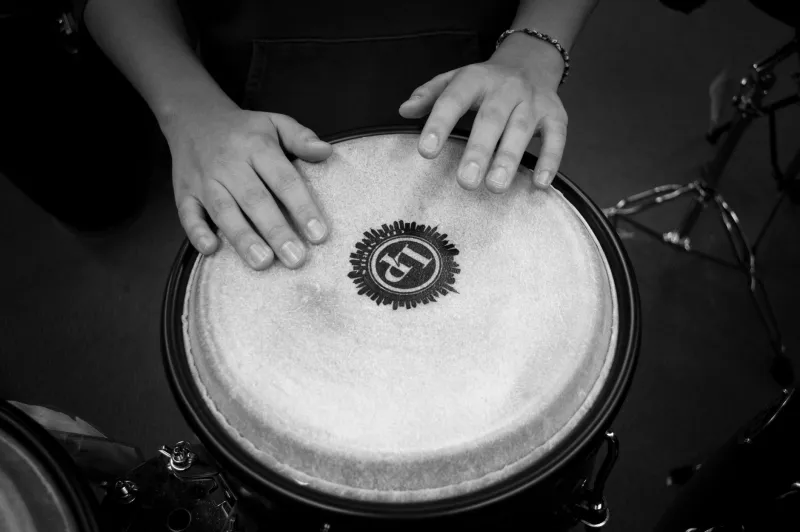
There's a moment that bodhrán teacher Ciarán Ó Murchú describes with a kind of quiet satisfaction. It happens mid-session, usually somewhere around the third tune of a set. An American student — someone who has been playing for six or eight months — suddenly stops tapping their foot. Their eyes go a little distant. Something clicks.
"They stop counting beats," Ciarán says, speaking from his home studio in County Clare, where he teaches online workshops to students scattered across the United States. "And they start actually listening. That's the moment I've been waiting for since lesson one."
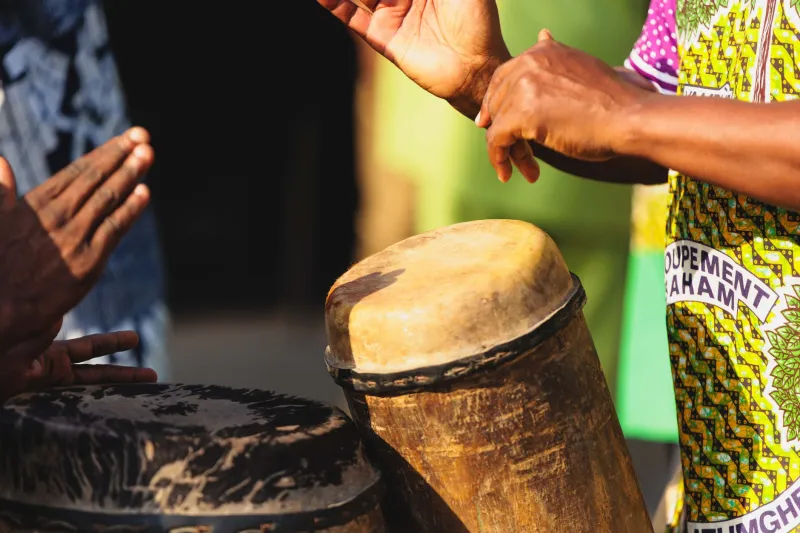
For most Americans encountering Irish traditional music, the bodhrán is the instrument they think they understand. It's the drum. It keeps time. It's the thing in the background. And honestly? That assumption has followed the instrument around like a bad reputation since Seán Ó Riada introduced it to the wider Irish music world in the 1960s. Even within Ireland, the bodhrán spent decades being dismissed, debated, and occasionally banned outright from sessions by purists who didn't think it belonged.
But something is changing in American listening culture — slowly, quietly, and with the kind of depth that doesn't make headlines until it's already everywhere.
The Problem With Hearing Without Listening
American audiences come to Irish music from all directions. Some arrive through family heritage, others through a festival stumbled upon in Boston or Chicago or Nashville. Many fall in through the rabbit hole of YouTube and TikTok, landing on a session video at 2 a.m. and losing an hour to it. What they encounter in those first moments is usually the melody — the fiddle, the flute, the uilleann pipes cutting through everything. The bodhrán, if they notice it at all, registers as texture. Background. Rhythm.
That's not wrong, exactly. But it's like walking through the Louvre and only noticing the frames.
"The bodhrán is having a conversation with every single instrument in the room," says Michelle Farrell, a Philadelphia-based bodhrán player who has been studying under Irish masters for the past decade and now teaches workshops throughout the Northeast. "It's not just keeping time — it's responding. When the fiddle player ornaments a phrase, the bodhrán player hears that and adjusts. When the tune breathes, the drum breathes. Americans are starting to catch that, and it's genuinely exciting to watch."
Michelle teaches a lot of what she calls "listening labs" — sessions where students sit with recordings and track only the bodhrán, following it through a full set of reels or jigs without the distraction of melody. It sounds almost meditative, and she says the effect on students is often exactly that.
Regional Voices, Regional Silence
One of the things separating a casual listener from a genuinely tuned-in one is the recognition that there's no single bodhrán sound. The instrument has regional dialects, just like the music surrounding it.
Players from West Kerry tend toward a drier, more restrained style — minimal ornamentation, the emphasis on space as much as sound. Clare players often bring more pulse, a slightly fuller tone. Donegal styles can be propulsive and urgent, matching the driving energy of that county's fiddle tradition. And then there are the players who've developed hybrid approaches, absorbing multiple regional influences and building something personal.
For American students, learning to hear these distinctions is a revelation. "I thought a drum was a drum," admits Dave Kowalski, a 34-year-old from Columbus, Ohio, who started taking online lessons two years ago after attending Milwaukee Irish Fest on a whim. "Then my teacher played me two recordings of the same tune — one with a Clare-style player, one with a Kerry-style player — and I honestly couldn't believe it was the same instrument. It completely changed how I listen."
That kind of perceptual shift is exactly what bodhrán educators are chasing. And it's increasingly possible thanks to the depth of traditional music content now available online, from archival recordings on sites like the Irish Traditional Music Archive to contemporary players streaming live sessions from living rooms in Ennis and Gweedore.
The Tipper as a Voice
Another piece of the puzzle that American audiences are gradually learning to appreciate is the tipper — the double-headed beater used to strike the drum's skin. In the hands of a skilled player, the tipper isn't just a striker. It's a voice.
The way a player rotates the tipper between strokes, producing tones from the tip and the heel, creates a rolling, articulated sound that has far more in common with bowing a fiddle than hammering a snare. Ornamentation techniques — cuts, rolls, presses against the underside of the skin to alter pitch — add layers that most casual listeners don't even register as intentional.
"People think I'm just waving my hand around," says Seamus Donnelly, a bodhrán player from Sligo who has toured extensively in the US and now leads workshops at Irish cultural centers in New York and Boston. "But every movement has a reason. The pressure of my left hand on the skin is changing the tone constantly. I'm shaping the sound the way a singer shapes a note. Once people understand that, they start watching differently. And then they start hearing differently."
Seamus says the shift in American audiences over the past five or six years has been noticeable. "There's more patience now. People come to workshops wanting to understand, not just to play. That's new."
Why It Matters Beyond the Drum
This awakening to bodhrán nuance isn't just a niche development for percussion nerds. It signals something broader about how Irish traditional music is being received in American culture — with more seriousness, more curiosity, and more genuine respect for its internal complexity.
For years, Irish music in America existed in a kind of celebratory bubble. It was joyful, it was communal, it was tied to identity and heritage and a good pint. All of that remains true and beautiful. But the music was rarely engaged with on its own terms as a sophisticated artistic tradition — one with as much internal logic, regional variation, and expressive depth as jazz or classical or any other form Americans readily afford that kind of reverence.
The bodhrán, weirdly enough, might be the instrument cracking that open. Because it's the one that looks the simplest and turns out to be anything but. Learning to hear it properly requires slowing down, paying attention, and letting go of assumptions. Which is, come to think of it, pretty much what Irish traditional music asks of anyone who wants to really enter it.
"The bodhrán is a test," Ciarán says, laughing a little. "If you can learn to listen to it — really listen — you can learn to listen to anything. And then the whole music opens up in a way it couldn't before."
That moment of opening is what teachers like Ciarán and Michelle and Seamus are working toward, one American student at a time. And if the sessions happening in living rooms from Portland to Pittsburgh are any indication, the ears are finally catching up to the music.
About time.