Six Holes, Infinite Soul: Why the Tin Whistle Is the Instrument Gen Z Never Knew It Needed
Somewhere in a college dorm in Austin, Texas, a nineteen-year-old named Maeve — yes, her Irish-American parents really did name her Maeve — is learning her third reel this week. She didn't grow up in a musical household. She doesn't read sheet music. Three months ago, she had never heard of The Chieftains. And the instrument changing her life cost her eleven dollars on Amazon.
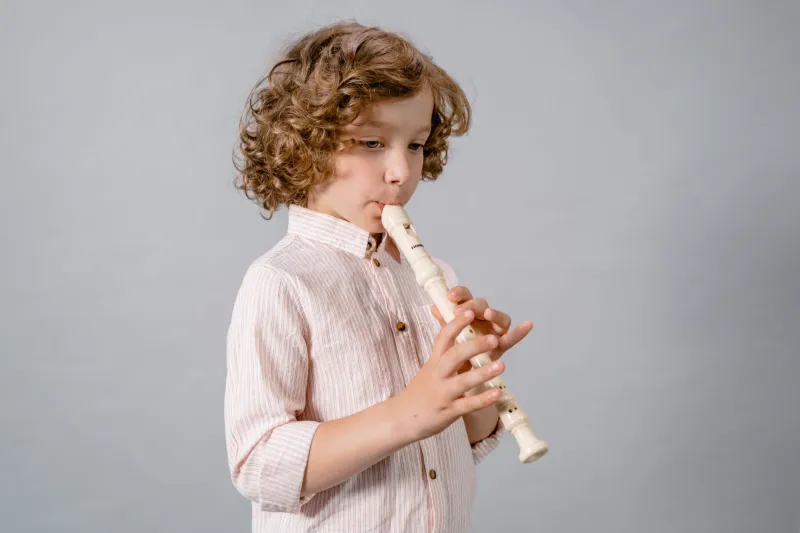
The tin whistle doesn't look like much. It's a simple, end-blown flute, usually made of nickel or brass, with six finger holes and a plastic mouthpiece. It fits in a jacket pocket. A beginner can coax a recognizable melody out of it within twenty minutes of picking it up. And right now, across the United States, it is quietly causing a revolution.
The Cheapest Ticket Into a Deep Tradition
Irish traditional music has always had a reputation for being welcoming — the session culture, the open circles, the idea that music belongs to everyone. But instruments have a way of creating barriers. A decent fiddle runs several hundred dollars minimum. Uilleann pipes, the aristocrat of Irish instruments, can cost thousands and take years before a player produces anything resembling a tune. Even a solid flute or concertina represents a real financial commitment.
The tin whistle sidesteps all of that completely.
"It's the most democratic instrument in the tradition," says Declan Murray, a Chicago-based whistle teacher who runs weekly beginner sessions out of a local Irish cultural center and has seen his class sizes nearly double over the past two years. "You hand someone a D whistle and within an hour they're playing 'Whiskey in the Jar.' That moment — when they realize they're actually doing it — is everything. That's the hook."
And the hook, it turns out, is landing hard with Gen Z in particular. A generation that grew up watching YouTube tutorials and learning skills through short-form content has found the tin whistle almost perfectly suited to its learning style. The instrument is forgiving enough for total beginners but deep enough to spend a lifetime mastering. There's a reason legends like Mary Bergin and Micho Russell dedicated entire careers to the whistle — the ceiling is as high as any instrument in the world.
TikTok Didn't Hurt
Ask most young American whistle converts where they first encountered the instrument and the answer is almost always the same: online. A viral clip of a session in a Galway pub. A TikTok of someone playing a haunting slow air in their bedroom. A YouTube rabbit hole that started with The Pogues and ended, somehow, at a 1970s Fleadh Cheoil recording.
"I saw this girl playing 'The Morning Dew' in her car and I genuinely could not figure out what instrument it was," says Jordan, a 22-year-old from Portland who has been playing for eighteen months. "I thought it was some kind of flute. I Googled it, found out it was a tin whistle, found out it cost twelve dollars, and ordered one that night."
Online communities have accelerated this pipeline dramatically. Subreddits dedicated to Irish traditional music regularly feature threads from complete beginners asking which whistle to buy first. The answer is almost always a Clarke Original or a Generation D whistle — both under fifteen dollars — followed by a recommendation to find a local session or dig into the vast archive of free tutorials available on platforms like YouTube and TikTok.
Teachers like Murray have adapted accordingly. He now runs a hybrid model — in-person classes supplemented by short video breakdowns of individual tunes posted to social media. "The kids who show up in person already know the fingering from online. What they're coming for is the feel, the ornamentation, the way the music breathes. You can't fully get that from a screen."
More Than a Gateway Drug
Here's the thing about the tin whistle that surprises most people who pick it up expecting a toy: it isn't one. The ornamentation system alone — cuts, strikes, rolls, slides — takes years to develop fluency in. The subtlety of breath control, the way a skilled player can make a simple six-note phrase sound completely different depending on phrasing and emphasis, the sheer emotional range the instrument is capable of — none of that comes cheap or fast.
For many players, that depth is exactly what keeps them coming back.
"I thought I'd learn a few tunes and move on," admits Sienna, a 25-year-old graphic designer from Brooklyn who started playing during the pandemic. "Three years later I'm going to sessions twice a week, I've started learning a bit of Irish, and I'm planning a trip to Clare next summer. The whistle didn't just give me a hobby. It gave me a whole world."
That trajectory — whistle to session to language to travel — is one that Irish cultural organizations across the US are paying close attention to. The Irish Arts Center in New York has noted increased enrollment in beginner trad workshops, with whistle consistently being the most popular entry point. Similar patterns are showing up at Irish cultural centers in Boston, Philadelphia, San Francisco, and Chicago.
The Sound of Something Real
There's a broader cultural context worth acknowledging here. Gen Z has come of age in an era of digital saturation, algorithmic music, and a widespread sense that something authentic is missing from modern life. The tin whistle, with its raw, slightly imperfect tone, its direct connection to a living tradition hundreds of years old, and its demand for real physical skill, offers something that a playlist simply cannot.
"It's the opposite of passive consumption," says Murray. "You have to actually do something. You have to practice. You make mistakes. And slowly, you get better. For a lot of young people, that process itself feels meaningful in a way they weren't expecting."
There's also something to be said for the communal dimension. Irish traditional music was never designed to be performed for an audience — it was always music made among friends, in kitchens and pubs and at crossroads. The session culture, which is alive and thriving in cities across the US, offers something genuinely rare: a room full of people making music together, for the pure joy of it, with no stage and no spotlight.
The tin whistle is often what gets someone through the door of that room for the first time.
Eleven Dollars and a Lifetime of Tunes
Maeve, back in her Austin dorm room, is currently working on "The Silver Spear." She's not there yet — the rolls are still a bit clunky and she keeps losing the tempo in the B part — but she'll get it. She's already talking about finding a local session to sit in on, even just to listen at first.
She paid eleven dollars to start down a road that, if experience is any guide, might take her places she never imagined. A kitchen session in Doolin. A Fleadh in Ennis. A lifelong friendship built around a shared tune.
Not bad for a piece of metal with six holes in it.