No Agenda, No Pressure, Just Music: How the Irish Session Became America's Unlikely Healer
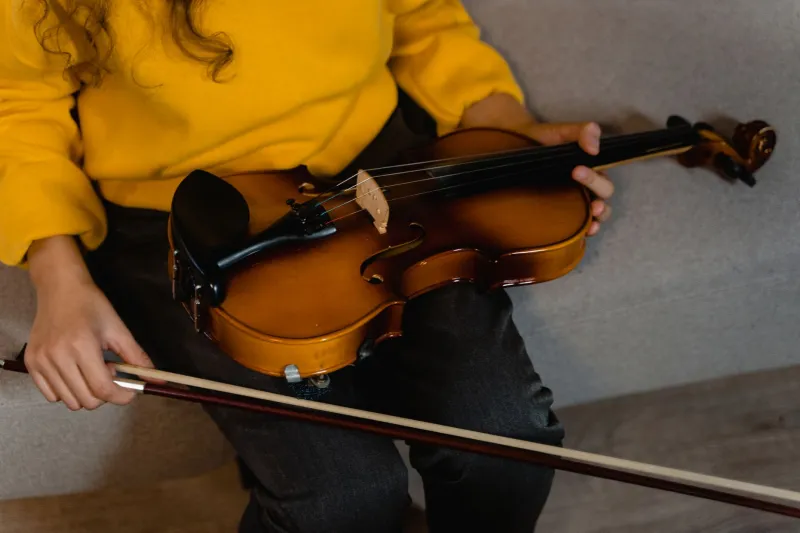
It starts, usually, with a fiddle. Someone pulls one out at a corner table in a pub, tucks it under their chin, and begins playing a reel. Within minutes, a tin whistle joins in. Then a bodhrán. Then a guitar. Nobody announced a start time. Nobody handed out sheet music. Nobody is in charge. And somehow, that's exactly the point.
This is the seisiún—the traditional Irish music session—and it's been quietly doing something remarkable in cities from Boston to Portland to Austin. It's healing people.
Not metaphorically. Not in a vague, feel-good way. We're talking about measurable shifts in anxiety, loneliness, and stress among Americans who've stumbled into these gatherings and found themselves unable to stop coming back.
What Even Is a Session?
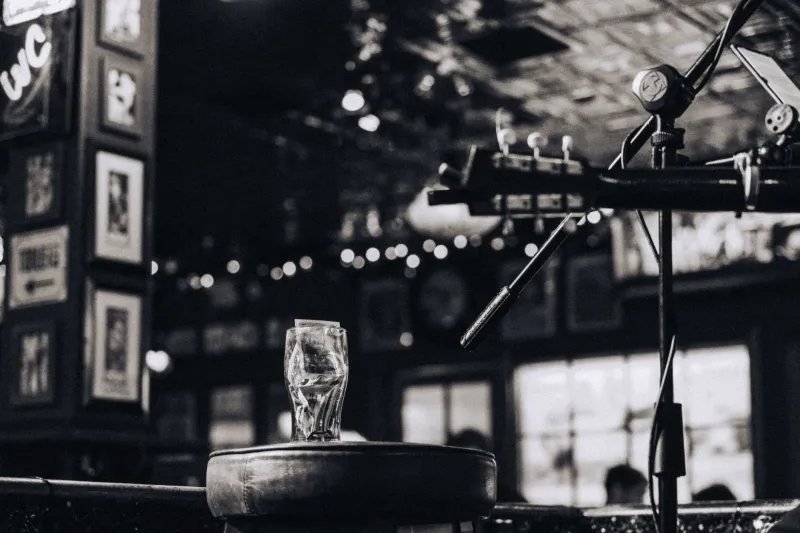
For the uninitiated, a traditional Irish music session—spelled seisiún in Irish—is about as far from a formal concert as you can get. There's no stage. There's no setlist. There's no audience, really, because anyone can pull up a chair and join. Tunes are called by whoever feels moved to call them, and the group follows by ear. You know the tune? Play along. You don't? Listen. Maybe next time.
The whole thing operates on an unspoken social contract that's centuries old and surprisingly sophisticated. Nobody shows off. Nobody dominates. The music flows in a kind of collective improvisation that isn't really improvisation at all—these are fixed traditional tunes—but feels alive in a way that rehearsed performance rarely does.
"There's no director," says Colm Brennan, a Dublin-born flute player who runs a weekly session at a pub in Chicago's Wicker Park neighborhood. "You show up. You play. If you're having a bad night, the music carries you anyway. That's the thing people don't expect."
The Loneliness Epidemic Meets an Ancient Antidote
America has a well-documented loneliness problem. The US Surgeon General declared it a public health crisis in 2023, noting that nearly half of American adults report measurable levels of loneliness. Social media promised connection and delivered comparison. Remote work gutted the office water cooler. Pandemic years hollowed out community infrastructure that hadn't fully recovered.
Into that gap, the seisiún fits like a key into a lock.
Dr. Priya Mehta, a licensed therapist based in Philadelphia who works with musicians and artists, started attending a local Irish session three years ago as a total beginner. She'd picked up the tin whistle during lockdown and was looking for somewhere to play. What she found changed how she thinks about community and mental health.
"The session removes the performance anxiety that keeps most people from engaging with music as adults," she explains. "There's no audience judging you. There's no audition. The social contract is essentially: show up, be present, contribute what you can. That's it. For people who've been socialized to believe they have to earn belonging, that's radical."
She now recommends sessions to some clients as a supplement to therapy. Not as a replacement—she's careful to say that—but as a real-world environment where certain therapeutic skills get practiced organically. Tolerating imperfection. Listening without fixing. Being part of something larger than yourself.
You Don't Have to Be Good. You Just Have to Show Up.
That last part matters more than it sounds. American culture is deeply achievement-oriented. We monetize hobbies. We optimize leisure. We turn relaxation into a productivity exercise. The session refuses all of that.
Marcus Webb, a software engineer from Denver who started attending sessions two years ago, had never played a musical instrument in his life before his late thirties. He bought a cheap bodhrán—the Irish frame drum—after seeing a session at a local Irish pub and being transfixed by it.
"I figured I'd be turned away or laughed out," he admits. "Instead, the guy running the session handed me a tipper, showed me the basic beat, and said 'just feel it.' I've been coming every Thursday for two years. I'm not great. But I'm there, and that matters."
Webb says the sessions have done more for his mental health than the meditation apps he'd cycled through for years. "With the apps, I'm still alone. I'm still in my head. At the session, I'm in the room. I'm with people. There's something happening that I'm part of."
Research supports what Webb describes intuitively. Studies on group music-making—including drumming circles and choir participation—consistently show reductions in cortisol levels, improved mood, and stronger feelings of social bonding. The session adds another layer: the absence of hierarchy means nobody leaves feeling like a failure.
The Regulars Know Something We Don't
Talk to anyone who's been attending sessions for years, and a pattern emerges. They describe the session not as something they do, but as somewhere they belong. The distinction is meaningful.
Siobhán Ó'Reilly, a fiddle player from County Clare who moved to Brooklyn twelve years ago and helps facilitate a session in Carroll Gardens, has watched dozens of Americans work through difficult life periods by showing up week after week.
"I've seen people come in after a divorce, after losing a job, after a death in the family," she says. "They don't talk about it, usually. They just play. Or they just sit. And the music holds them. That's what it's always done in Ireland. You didn't need to explain your grief. You just came and the music understood."
That emotional containment—music as a vessel for feelings that don't have words—has deep roots in Irish cultural tradition. From the keening of funeral laments to the frenetic energy of a reel that makes you want to jump out of your skin, Irish traditional music has always been emotionally functional rather than merely decorative.
Finding Your Session
If you're curious, the barrier to entry is genuinely low. Sessions happen in Irish pubs, community centers, living rooms, and library meeting rooms across the country. Websites like The Session (thesession.org) maintain a global database of regular sessions, with dozens listed in major American cities.
You don't need to play an instrument to attend most sessions—many welcome listeners. But if you do play something, almost any acoustic instrument can find a home eventually. Fiddles, flutes, tin whistles, uilleann pipes, and bodhráns are the core, but guitars, bouzoukis, and even pianos have found their way in.
The etiquette is worth learning before you go—sessions have their own social rhythms and quiet rules—but most experienced players are happy to guide a newcomer. That generosity is, in itself, part of what makes the whole thing work.
"People think they're coming for the music," says Colm Brennan back in Chicago. "And they are. But they stay for the people. They stay because for two hours on a Tuesday night, nobody wants anything from them. They just want to play tunes together. In this world, that's not nothing. That's everything."
The Irish have known this for centuries. America is just catching up.