More Than a Dance: How Céilí Is Quietly Rebuilding American Community From the Ground Up
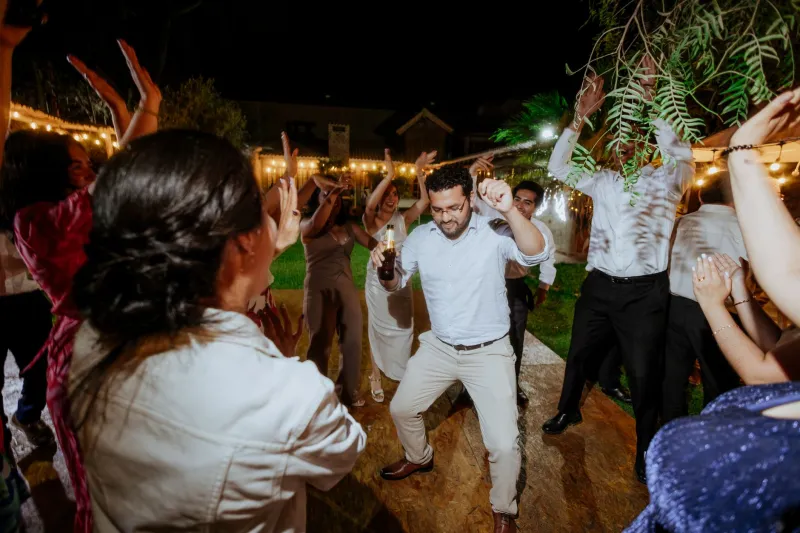
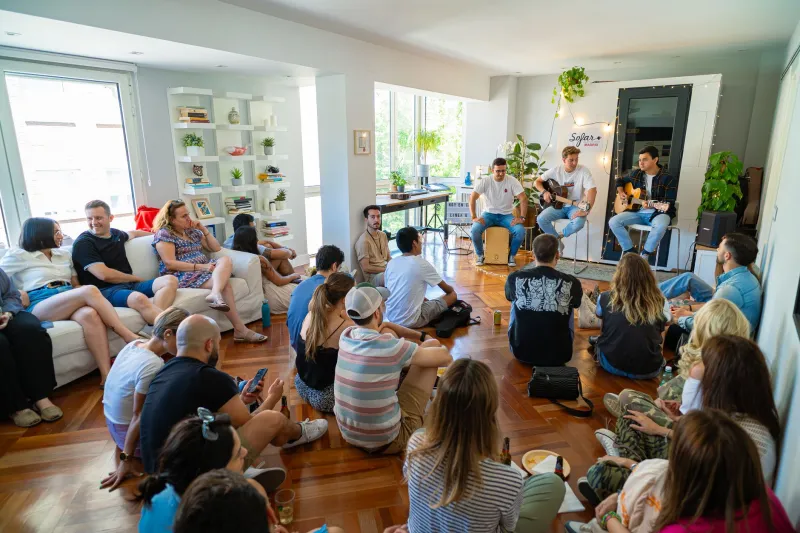
Walk into the right church hall in Chicago on a Thursday night and you might hear something a little surprising. Not a sermon. Not a bingo caller. Instead, a fiddle sawing through a reel at full tilt, a caller shouting instructions over the music, and somewhere between thirty and sixty people — ranging from college students to retirees — stumbling, laughing, and occasionally nailing the footwork of a Siege of Ennis with something close to grace.
This is céilí dancing. And if you haven't heard of it yet, you probably will soon.
What Exactly Is Céilí?
For the uninitiated, céilí (pronounced kay-lee) is the structured, communal form of Irish group dancing that's been a cornerstone of Irish social life for centuries. Unlike the solo competitive style most Americans associate with Riverdance or Dancing with the Stars, céilí is participatory by design. You need a partner. Often you need a group of eight. The whole point is that nobody sits on the sidelines.
Sets are called out by a designated leader, patterns are repeated, and the music — always live, always acoustic — drives the whole thing forward like a heartbeat. It's organized enough to follow, loose enough to laugh at yourself, and social in a way that most modern American leisure activities simply aren't.
That combination, it turns out, is striking a nerve.
The Loneliness Factor
America has a well-documented loneliness problem. The U.S. Surgeon General issued an advisory on it in 2023. Social psychologists have been flagging declining community participation for years. And while apps, streaming platforms, and remote work have made individual life more convenient than ever, they've also quietly hollowed out the kind of spontaneous, face-to-face interaction that used to just happen — at bowling leagues, church socials, neighborhood block parties.
Céilí, almost accidentally, addresses all of this head-on.
"You literally cannot do this alone," says Maeve Callahan, who runs a weekly céilí night out of a community arts space in Portland, Oregon. "You have to hold someone's hand. You have to make eye contact. You have to respond to another person's body in real time. For a lot of people, that's more human contact than they've had all week."
Callahan started her classes in 2019 with a handful of participants, mostly Irish heritage enthusiasts. Post-pandemic, she's running three sessions a week with a waitlist. The demographic has also shifted. Where she once saw mostly middle-aged Irish Americans, she now has college students, South Asian immigrants, retired veterans, and parents who bring their kids along because the babysitter fell through and ended up staying anyway.
The Mental Health Angle Nobody Expected
Psychologists who study movement and social behavior have been paying attention. The combination of physical activity, rhythmic music, and cooperative social engagement checks a remarkable number of boxes for mental wellness simultaneously.
Dr. Patricia Noonan, a behavioral therapist based in Boston who has incorporated céilí into community wellness programs, puts it plainly: "You've got aerobic movement, which is great for mood regulation. You've got live music, which activates different neural pathways than recorded sound. And you've got a task-based social interaction — you're not just making small talk, you're working together toward something. That removes a lot of the anxiety people feel about socializing."
For participants dealing with social anxiety, depression, or just the grinding low-grade disconnection of modern urban life, the structured nature of céilí turns out to be a feature, not a bug. You don't have to think of something clever to say. The dance gives you a reason to be there, a role to play, and a built-in excuse to grab a stranger's hand.
Generations on the Same Floor
One of the more striking things about céilí nights across the country is the age range. In most American recreational spaces, generations are siloed. Youth sports are for kids. Golf is for dads. Yoga is for millennials. Céilí doesn't seem to got that memo.
In Denver, a céilí club that formed around a local Irish cultural organization has become notable for the relationships that form across age gaps. Teenagers who come in dragged by their parents end up teaching retired participants how to film reels for Instagram. Older members teach younger ones the history behind the dances — why certain figures exist, where specific sets originated, what a scoruíocht used to mean in rural Ireland.
"My grandmother came over from Galway," says 22-year-old Brendan Tully, who now helps call sets at the Denver sessions. "She passed before I got really into this. But learning these dances feels like learning her language, in a weird way. And then you're doing it with a 70-year-old woman who actually remembers dancing these at parish halls. That's not something you get at a bar."
Beyond the Irish Bubble
What's particularly interesting about the current céilí wave is how far it's traveled from its ethnic origins. While Irish American communities were the obvious early adopters, the people showing up to sessions increasingly have no Irish background whatsoever.
In Houston, a céilí group that began at an Irish pub has found a significant following among Latino and Vietnamese American participants who were drawn in initially by the live music and stayed for the community. In Minneapolis, a céilí night has become a regular fixture at a community center that primarily serves East African immigrant families. The dances don't require language fluency. They don't require cultural prior knowledge. They require showing up and being willing to be a beginner.
Callahan, back in Portland, sees this as deeply consistent with what céilí was always meant to be. "In Ireland, these dances happened at crossroads, in barns, in any space that could hold people. They weren't exclusive. They were how communities formed. We're just doing the same thing in a different context."
What Keeps People Coming Back
Ask any regular céilí dancer why they keep showing up, and the answers tend to cluster around a few themes: the music, the laughter, the sense of being genuinely seen by other people.
There's something to that last part worth sitting with. In a céilí, you're not a profile or a username or a content creator. You're a body in a room, holding hands with other bodies, moving to music played by real people with real instruments. When you mess up — and you will mess up — everyone laughs, including you, and then you try again.
For a lot of Americans, that experience has become genuinely rare. Which might be exactly why, in community centers and church halls and arts spaces from Oregon to Massachusetts, more and more people are lacing up their shoes and asking a stranger to dance.
The fiddle doesn't wait. Might as well join in.