One Drum to Rule Them All: Why the Bodhran Is America's New Obsession With Irish Music
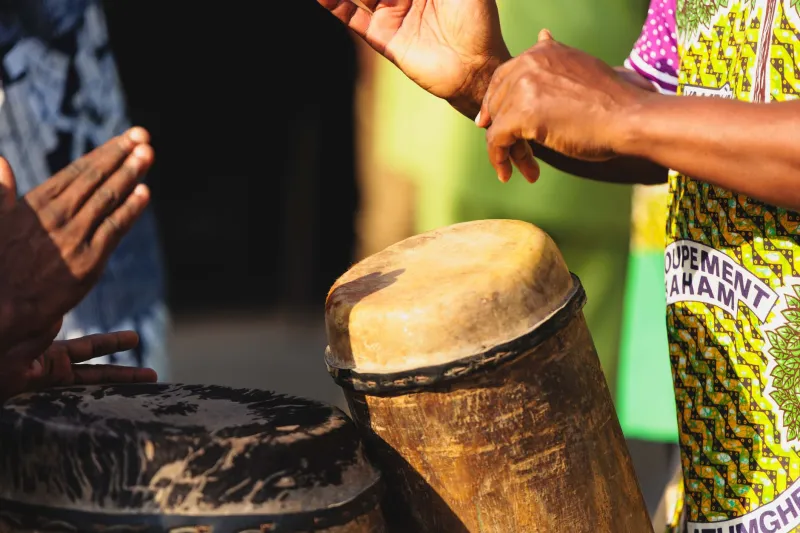
It doesn't look like much at first glance. A shallow wooden frame, a stretched skin — traditionally goatskin, though modern makers have gotten creative — and a small double-headed beater called a tipper or a cipin. No pedals. No tuning keys. No complicated setup. And yet, somehow, the bodhran (pronounced BOW-rawn, for the uninitiated) has quietly become the instrument that's pulling thousands of Americans headfirst into the deep, beautiful world of Irish traditional music.
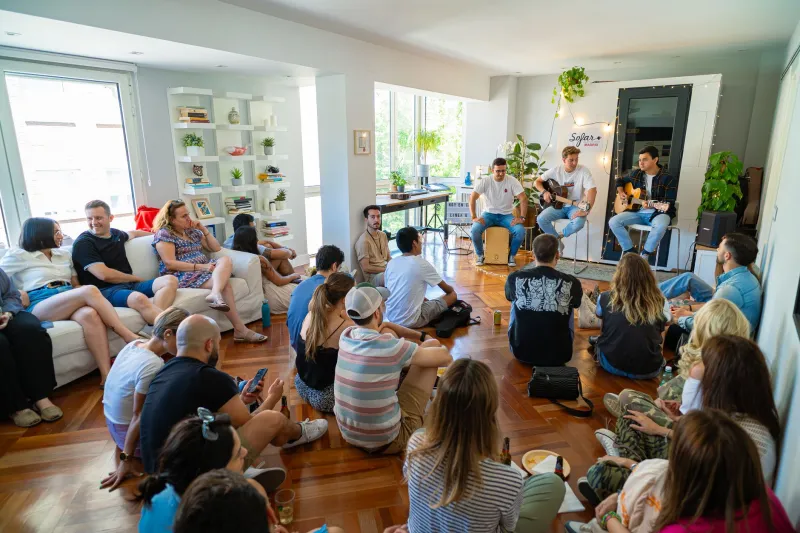
Walk into any Irish session at a pub in Chicago, Boston, or even Austin these days, and you'll notice something interesting: at least one player at that table didn't grow up with trad in their DNA. They found it through the bodhran. And they are not going back.
The Instrument That Lowers the Barrier
Let's be honest about something. Irish traditional music has a reputation — deserved, in many ways — for being technically demanding. The uilleann pipes take years just to produce a clean note. Mastering the fiddle in the Irish style is a lifelong pursuit. Even the tin whistle, often marketed as a beginner instrument, requires real dedication to play at session standard.
The bodhran, though? You can make a genuinely satisfying noise on one inside of an afternoon.
"That's the hook," says Declan Forde, a Dublin-born instrument maker who now runs a workshop outside of Portland, Oregon, crafting hand-tunable bodhrans that sell to customers across North America. "People pick it up, they get a feel for it in twenty minutes, and they're immediately part of the music. It's not that it's easy — there's enormous depth to it once you go further — but the entry point is so accessible. That matters."
Forde has seen his customer base shift dramatically over the past decade. Where once his buyers were almost exclusively Irish-Americans with a direct cultural connection to the music, today he's shipping drums to hip-hop producers in Atlanta, indie rock bands in Portland, and film composers in Los Angeles who want that raw, earthy pulse in their sonic palette.
From the Session Floor to the Studio
The crossover appeal of the bodhran isn't entirely new, but it has accelerated sharply. Sample packs featuring bodhran loops started appearing on production platforms a few years back, and the response surprised even the people who uploaded them.
Marcus Webb, a beatmaker from Philadelphia who produces under the name Sable Tide, stumbled onto a bodhran sample while building a track that needed something "ancient but not cheesy." He ended up buying a real one six months later.
"I was trying to get this texture that felt like it came from somewhere real, somewhere with history," Webb explains. "I went through a whole thing with taiko drums, with frame drums from the Middle East, and then I hit a bodhran loop and it just sat in the mix differently. It had this urgency. I had to know what it was."
Webb is now taking online lessons from a teacher based in County Clare, and while he's upfront that his production work isn't traditional Irish music by any stretch, he's become genuinely invested in understanding where the instrument comes from. "The more I learn about the actual tradition, the better I understand why it sounds the way it does. You can't separate the instrument from the culture."
That sentiment — that the bodhran serves as a doorway, not just a novelty — comes up again and again when you talk to people inside the Irish music community.
Teachers Are Seeing It Happen in Real Time
Siobhan Ní Mhurchú has been teaching bodhran in the United States for over fifteen years, first in person through Irish cultural centers and now primarily through online workshops that draw students from across the country. The demographic shift she's witnessed is striking.
"When I started, nearly all my students had some Irish heritage and were looking to reconnect with it," she says. "Now I have maybe forty percent who have zero Irish background whatsoever. They're coming from completely different musical worlds — jazz, bluegrass, electronic music, all kinds of things — and they found the bodhran through YouTube, through a session they wandered into, through a friend."
She's careful not to treat this as just a trend. "The ones who stick with it, they don't stay on the surface. They start asking about the music, about the songs, about what the rhythm is actually doing underneath a reel or a jig. And then they're hooked on the whole thing. I've had students go from knowing nothing about Irish music to flying to the Willie Clancy Summer School in County Clare. That's the bodhran working as it should."
Why This Drum, Why Now?
It's worth asking what's driving this particular moment. Irish culture has always had a presence in America — it's woven into the national fabric in ways that go well beyond St. Patrick's Day parades — but the bodhran's current surge feels connected to something broader.
There's a hunger, especially among younger Americans, for music that feels physically rooted. In an era of laptop production and digital everything, an instrument you hold against your body, that you play with your whole arm, that vibrates through your chest — that's something different. The bodhran is tactile in a way that feels almost countercultural right now.
There's also the social dimension. The Irish session is one of the few musical traditions where participation is genuinely communal and largely non-hierarchical. You don't need to audition. You show up, you listen, you join in when you're ready. For Americans who grew up in a music culture that often feels competitive or exclusionary, that open-door ethos is quietly revolutionary.
"The session culture is inseparable from the instrument," says Forde. "When you buy a bodhran, you're not just buying a drum. You're buying a ticket into a community. That's rare."
The Depth Beneath the Surface
None of this is to suggest the bodhran is simple. Ask any serious player and they'll tell you about the years spent developing tone, working on ornamentation, learning to listen to the melody instruments and support without overplaying. There's a whole ongoing conversation within the traditional music world about the bodhran's role — how much it should drive the rhythm, when to pull back, how to serve the tune rather than dominate it.
But that learning curve is a feature, not a bug. It gives players somewhere to go. The instrument that welcomes you in the first hour can still challenge you in the tenth year.
For the thousands of Americans currently picking one up for the first time — in music shops, at Irish festivals, via online tutorials — that journey is just beginning. And if the stories of people like Marcus Webb and the students of teachers like Siobhan Ní Mhurchú are any guide, a whole lot of them are going to end up somewhere they never expected: deep inside a tradition that's been keeping a pulse going for centuries, and showing absolutely no signs of stopping.
The bodhran doesn't just sound ancient. It sounds alive. And right now, America is listening.