Something Borrowed, Something Céilí: Why American Couples Are Trading the Chicken Dance for Irish Reels
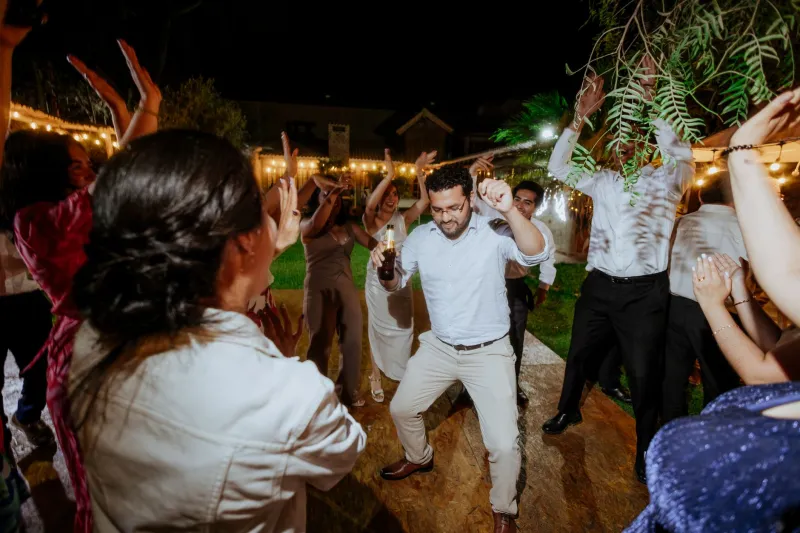
There's a moment at a céilí when something clicks. You're standing in a line or a circle, a fiddle is flying at roughly the speed of light, someone is shouting instructions you're only half following, and then — somehow — the whole room locks in together. Feet hit the floor on the same beat. Strangers grab each other's hands. Everyone laughs. It's chaotic and joyful and weirdly communal in a way that a carefully curated Spotify wedding playlist simply cannot replicate.
American couples are starting to notice. And wedding planners across the country are scrambling to keep up.
The Chicken Dance Has Left the Building
For decades, the American wedding reception followed a pretty reliable script: cocktail hour, first dance, father-daughter dance, dinner, open bar, DJ playing the same 40 songs everyone has heard since 1997. It's comfortable. It's inoffensive. And for a growing number of couples, it's exactly the problem.
"People are done with generic," says Chicago-based wedding planner Maura Hennessy, who has incorporated traditional Irish entertainment into more than a dozen weddings over the past three years. "They want their wedding to feel like them. And more and more, that means bringing in something with actual roots to it — something that tells a story."
For couples with Irish heritage — and plenty without — céilí dancing is increasingly becoming that story. What started as a niche request from Irish-American families in cities like Boston, New York, and Chicago has spread well beyond the diaspora. Hennessy says she's now fielding inquiries from couples in Denver, Nashville, and Seattle who have zero Irish ancestry but are drawn to the energy and inclusivity of the format.
"A céilí doesn't care if you've never danced before," she says. "That's the whole point. You show up, you get called through the steps, and ten minutes later you're doing it. That's not something you can say about a lot of entertainment options."
The Caller Is the Secret Weapon
At the heart of any great céilí wedding experience is the caller — the person who walks guests through each dance, keeping the energy high and the panic low. Think of them as a cross between a square dance caller and the most enthusiastic camp counselor you ever had.
Kieran Flood, a Boston-based musician and caller who performs with his band at weddings from Maine to Maryland, says the role is more nuanced than people expect. "You're reading the room constantly. You've got grandmothers on one side and twenty-two-year-olds who've had three glasses of prosecco on the other, and you need everyone moving together. When it works, it's honestly one of the best feelings in music."
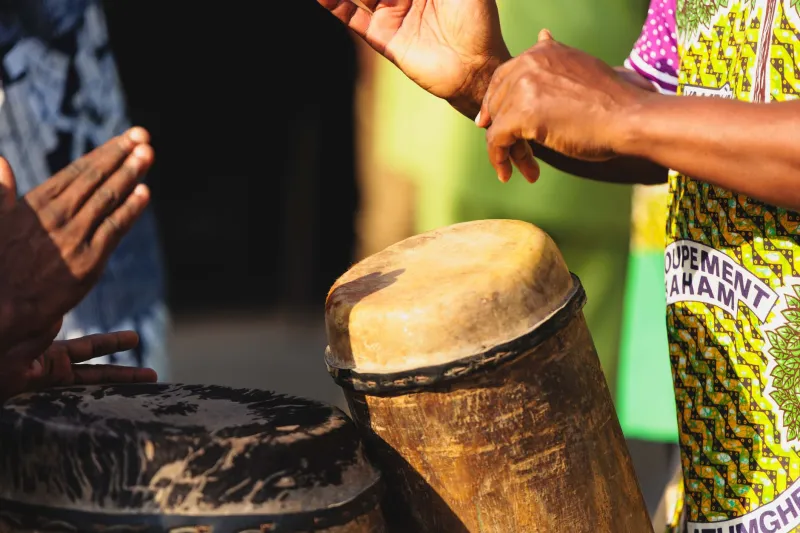
Flood's band typically combines a live bodhrán, fiddle, and uilleann pipes or tin whistle, with a setlist that moves between accessible céilí dances like the Siege of Ennis and the Walls of Limerick — both crowd favorites for beginners — and more energetic sets for guests who want to push further into the night. The bodhrán, he notes, has become a particular talking point at receptions.
"People are fascinated by it. They've never seen one up close. By the end of the night, half the wedding party wants to try it."
More Than Just a Party Trick
For couples who've gone the Irish route, the appeal goes beyond novelty. Siobhán and Derek Walsh, who got married in Philadelphia last spring, spent months researching how to honor Siobhán's County Clare roots without making the wedding feel like a themed event.
"We didn't want it to be leprechauns and shamrocks," Siobhán laughs. "We wanted something genuine. Something my grandmother would have recognized."
They hired a four-piece traditional band and a caller, cleared the dance floor after dinner, and taught their guests three céilí dances before the night was done. Derek, who grew up in suburban Pennsylvania with no Irish background whatsoever, admits he was skeptical going in.
"I thought it was going to be awkward," he says. "But the caller made it so easy. By the second dance, my college roommates were doing it better than me. It became this thing that everyone was talking about — not just during the wedding, but for weeks after."
That lingering effect is something wedding planners are hearing again and again. Unlike a flashy light show or a photo booth, a céilí seems to create actual memories — shared physical experiences that guests carry with them.
"There's research on this," says Dr. Lena Park, a cultural anthropologist at NYU who studies ritual and celebration. "Synchronized movement between strangers builds social bonds quickly. It's why we dance at celebrations in the first place. The céilí is just a particularly well-designed version of that."
Building the Playlist and the Floor
For couples considering going this route, there are practical considerations beyond just booking a band. Hennessy recommends thinking about timing carefully — céilí dancing works best after dinner when guests are loose but not exhausted, and before the open dancing portion of the night rather than replacing it entirely.
Floor space matters too. Céilí dances often involve long lines or large circles, so a cramped reception hall can kill the vibe before it starts. And sound levels need to be managed — traditional instruments can get lost in a big room if the acoustics aren't right.
But perhaps the biggest factor is buy-in from the couple themselves. "You have to actually want to do it," Flood says. "The best céilí weddings I've played are the ones where the couple is out there first, leading by example. When the bride and groom are the most enthusiastic people on the floor, everyone follows."
A Wider Cultural Hunger
The rise of the céilí wedding fits into something larger happening in American culture right now — a genuine hunger for experiences that feel rooted, participatory, and real. In an era of algorithm-generated playlists and passive entertainment, there's something quietly radical about a room full of people moving together to live music, guided by a human voice, with no phones required.
Irish traditional music has always understood this. The session, the céilí, the kitchen dance — these weren't performances you watched. They were things you did together. That ethos, it turns out, translates beautifully to a wedding reception in Philadelphia or Denver or Nashville.
"People are craving connection," Hennessy says. "And a céilí just delivers that in a way that's hard to explain until you're actually in it."
So if you're deep in wedding planning and starting to wonder whether anyone is actually going to remember the DJ set — maybe it's time to call a fiddler instead.