Rebels With a Reel: The Outlaws Who Refused to Let Irish Music Die
There's a romantic notion floating around Irish music circles that traditional tunes simply passed from generation to generation like a cherished heirloom — carefully wrapped, gently handed over, never dropped. The truth is a whole lot messier, and honestly, a whole lot more interesting.
The survival of Irish traditional music is less a story of careful preservation and more a story of defiance. It's a story of people who smuggled instruments across checkpoints, played in secret after curfews, recorded in back rooms, and generally refused to let the powers-that-be — whether British colonial administrators, Catholic Church officials, or the relentless tide of commercial pop culture — bury something they loved. Call them traditionalists if you want. Historians might call them cultural preservationists. But if we're being honest? These folks were outlaws.
When Music Became a Political Act
To understand why anyone needed to "steal" Irish music back from the edge of extinction, you have to understand the environment in which it nearly disappeared. The Penal Laws of the 17th and 18th centuries didn't just suppress Catholic worship — they targeted the entire cultural apparatus of Gaelic Ireland. Harpers, storytellers, and musicians were viewed with deep suspicion by colonial authorities. The wandering musician wasn't just an entertainer; he was a keeper of language, memory, and identity. And that made him dangerous.
Fast forward to the 19th century and you've got the twin catastrophes of the Great Famine and mass emigration gutting entire communities where oral musical traditions lived. Then comes the 20th century, and suddenly the enemy isn't a redcoat — it's a radio. American jazz, big band swing, and eventually rock and roll flooded Irish airwaves and dance halls. The céilí was competing with the jive, and for a while, it looked like the jive was winning.
The musicians who pushed back didn't do it quietly.
The Collectors Who Crossed Every Line
One of the most underappreciated chapters in this story involves the collectors — academics, enthusiasts, and musicians who traveled deep into rural Ireland in the early-to-mid 20th century, often working against the wishes of local clergy who viewed certain dance music as morally suspect. The Church's campaign against so-called "foreign dances" in the 1920s and 30s is well documented, but less discussed is how it also cast a shadow over native Irish music that was associated with late-night house dances and what priests darkly called "occasions of sin."
Figures like Séamus Ennis and Breandán Breathnach — a uilleann piper and a musicologist, respectively — spent years essentially racing against cultural amnesia, recording and transcribing tunes from elderly players who had learned them in a world that no longer existed. Breathnach's monumental Ceol Rince na hÉireann (Dance Music of Ireland) collected hundreds of tunes that might otherwise have vanished entirely. These weren't glamorous gigs. They were long drives down narrow roads, cups of tea in drafty kitchens, and the occasional hostile reception from neighbors who wondered why you were poking around asking old people to play their fiddles.
"There's a reason we call them collectors," says Brooklyn-based fiddle player Maura Clancy, who has spent years studying the transmission of Irish music in immigrant communities. "But really, they were rescuers. They were grabbing tunes out of the fire."
The American Angle Nobody Talks About
Here's where it gets particularly fascinating for American audiences: a significant chunk of what we now consider the Irish traditional canon survived precisely because of emigration to the United States. Irish immigrants in cities like Boston, New York, and Chicago didn't just bring their music with them — they kept playing it in a way that, ironically, sometimes preserved older styles more faithfully than what was happening back home.
The commercial recording industry in early 20th-century America, hungry for content to sell to immigrant communities, captured performances by musicians like Michael Coleman, James Morrison, and Paddy Killoran — Sligo fiddlers who recorded prolifically in New York during the 1920s. Those 78 rpm records made their way back across the Atlantic and became foundational texts for the Irish traditional revival. American commerce, of all things, helped save the music.
"Coleman's recordings are still the gold standard for a certain style of Sligo fiddle," says Chicago-based musician and educator Declan Byrne. "And he made them in Manhattan. There's something almost absurd about that, but also kind of beautiful."
The Revival's Rebellious Children
The mid-20th century Irish folk revival — spearheaded by groups like Comhaltas Ceoltóirí Éireann and later electrified by bands like Planxty, The Bothy Band, and De Dannan — continued the outlaw tradition in its own way. These musicians weren't just reviving old tunes; they were actively challenging the notion that traditional music had to stay frozen in amber to be legitimate. They plugged in guitars, borrowed from blues and rock, and blended influences in ways that scandalized purists.
And now, that spirit has crossed the Atlantic in full force. Across the United States, a new generation of musicians — many of them with no Irish heritage whatsoever — are picking up tin whistles, learning sets from YouTube tutorials, and showing up to sessions in places like Denver, Nashville, and Portland. They're carrying on the rebellious tradition of refusing to let this music belong to only one group of people, one time period, or one narrow definition of authenticity.
"I think the music has always found a way to survive by being a little bit sneaky," laughs Clancy. "It hides in unexpected places. It shows up where you don't expect it. That's kind of its whole deal."
The Tune That Won't Stay Put
There's a broader lesson buried in this history that resonates well beyond the Irish music world. Cultural traditions don't survive because institutions protect them behind velvet ropes. They survive because stubborn, passionate, sometimes rule-breaking individuals decide that something matters enough to fight for — even when fighting means recording in a kitchen, playing past curfew, or hauling a fiddle onto a boat to New York with nothing but hope in your pocket.
The céilí bandits — if we're going to give them a name — weren't interested in museums. They wanted living music, breathing music, music that could still make you move your feet at midnight and break your heart at noon.
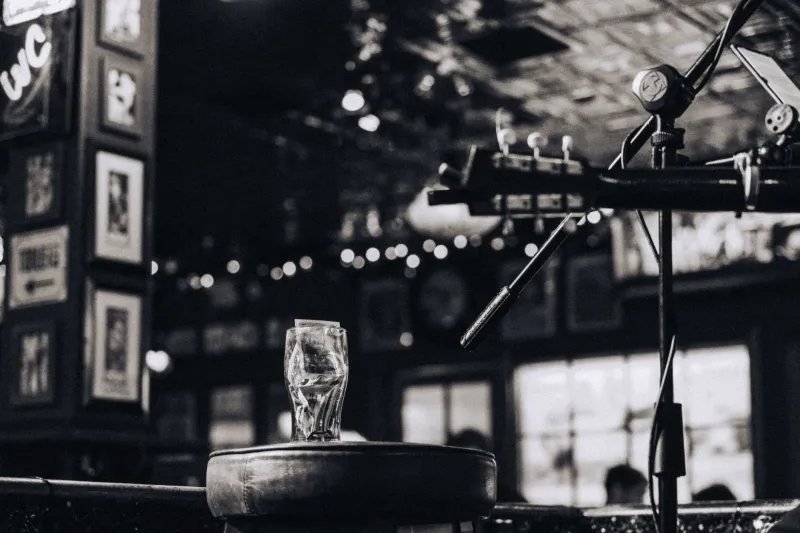
Next time you hear a reel at a session bar in Chicago or a jig floating out of a festival tent in San Francisco, remember: somebody, somewhere, once risked quite a lot to make sure that tune didn't disappear. That's not just heritage. That's defiance. And at Sin É, we think that's worth raising a glass to.