Bellows, Bags, and Blisters: Inside America's Obsession With Building the World's Hardest Instrument
There's a workshop in Portland, Oregon, where a former aerospace engineer named Dale spends his weekends elbow-deep in African blackwood shavings, calfskin leather, and a fog of resin. He's not building furniture. He's not restoring a vintage car. He's making uilleann pipes — the ancient, elbow-bellowed, hauntingly beautiful instrument that most Americans couldn't name if their lives depended on it. And he's not alone.
Across the country, in garages, basements, and community woodshops from Asheville to Austin, a quiet but passionate underground movement is taking root. American makers and musicians are falling hard for the uilleann pipes — arguably the most complex folk instrument on the planet — and they're not waiting for a Dublin workshop to hand them a set. They're building their own.
So What Exactly Are Uilleann Pipes?
If you've ever heard a sound that felt like a lament and a celebration wrapped into one — something richer and more layered than Scottish bagpipes, something that seems to breathe — there's a good chance it was uilleann pipes. The name comes from the Irish word for elbow (uillinn), because unlike their Highland cousins, these pipes are powered by a bellows tucked under the arm rather than blown by mouth. That single mechanical difference opens up a world of expressive possibility.
A full set of uilleann pipes includes a chanter (the melody pipe), a bag, a bellows, three drones, and up to three regulators — keyed pipes that allow a skilled player to produce chordal accompaniment with their wrist. The whole rig, when played well, sounds like a small orchestra. When played badly, it sounds like a very distressed goose.
Learning takes years. Building one from scratch? That's a whole other mountain to climb.
Why Now? Why Here?
The timing of this American surge isn't random. Music scholars and community organizers who work in the Irish trad space point to a few converging forces.
First, there's the broader folk revival that's been quietly building since the pandemic. When live venues went dark in 2020, a lot of musicians started asking bigger questions about what music actually meant to them. Digital production tools and streaming had already made music feel increasingly disposable. The uilleann pipes are the opposite of disposable. They demand everything from you.
Second, there's the internet — paradoxically. Online communities like the Chiff and Fipple forums and dedicated subreddits have connected American enthusiasts with Irish makers, teachers, and scholars in ways that simply weren't possible twenty years ago. What was once a closed, almost secretive world of knowledge passed down in Irish towns is now being documented, debated, and shared in real time.
Third — and this is the part that's genuinely exciting — there's a new generation of experimental musicians who are drawn to the instrument precisely because it doesn't fit neatly into any genre box. The uilleann pipes have shown up in post-rock, ambient drone music, and avant-folk projects. When you hear them layered under a loop pedal or processed through reverb, something ancient and something completely new exist in the same breath.
The Makers Leading the Charge
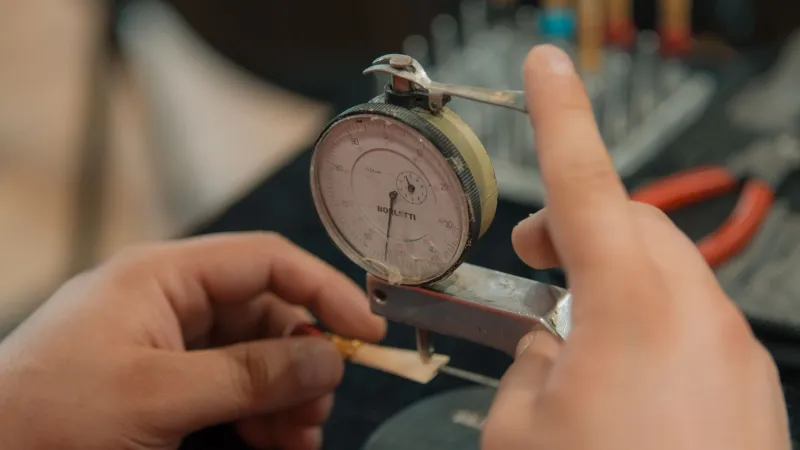
Building uilleann pipes is not a weekend project. The tolerances required for a chanter to play in tune are extraordinarily fine — we're talking thousandths of an inch. The reeds, which are typically made from cane and require their own dedicated craft, are so temperamental that even experienced players sometimes describe them as having personalities.
Yet American makers are diving in. Organizations like the Uilleann Pipers Club of North America have seen membership inquiries tick steadily upward. Workshops taught by Irish master makers — some conducted over Zoom, some in person at Irish cultural festivals — are consistently selling out.
What's particularly striking is the demographic breadth. Yes, there are Irish-American descendants reconnecting with heritage. But there are also musicians with zero Irish ancestry who simply heard the instrument and couldn't let it go. A jazz bassist in Chicago. A luthier in New Mexico who spent thirty years building classical guitars before pivoting entirely. A college student in Boston who started after watching a single YouTube clip of Liam O'Flynn playing with the Chieftains.
For many of them, the act of building is inseparable from the act of learning. When you've spent six months turning a piece of wood into a chanter, you approach playing it differently. There's a reverence built into the process.
The Technical Mountain
Let's be honest about what we're dealing with here. Uilleann pipes are routinely described as one of the hardest instruments in the world to master. Unlike a tin whistle, which a beginner can produce a recognizable tune on in an afternoon, the uilleann pipes require the player to simultaneously manage bellows pressure with one arm, control finger technique with both hands, and manipulate the regulators with wrist movements — all while maintaining a stable bag. Coordinating all of that at once takes most players years just to make sound pleasant.
And that's before you even get into the ornamental vocabulary of Irish traditional music — the cuts, strikes, and rolls that give the music its rhythmic vitality and emotional texture.
But here's the thing: the people doing this don't talk about the difficulty as a deterrent. They talk about it as the point. In a world where you can auto-tune a vocal, sample a drum kit, and release a track without ever being in the same room as another musician, the uilleann pipes offer something radical. Genuine, uncompromising difficulty. The kind that forces you to slow down, pay attention, and actually get good.
What This Means for Irish Music in America
For a site like Sin É, where we spend a lot of time tracking the ways Irish music and culture are evolving on American soil, this movement matters beyond the instrument itself. The uilleann pipes have always been central to the Irish trad tradition — they're the instrument that arguably carries the most emotional weight in the canon, from slow airs to rousing jigs. Seeing Americans not just listen to them but commit to making and playing them is a different kind of cultural engagement.
It's not tourism. It's not nostalgia. It's participation.
There's something fitting about an instrument powered by the elbow — by physical effort, by the body's own mechanics — becoming a symbol of resistance to the passive, algorithmic music experience that defines so much of modern listening. The uilleann pipes don't stream well. They don't translate easily to a thirty-second clip. You have to sit with them.
And increasingly, Americans are doing exactly that — sitting down in dusty workshops, reed knives in hand, shavings on the floor, building something that takes years to understand. Something old. Something worth the trouble.