The Instrument America Forgot: How the Uilleann Pipes Are Finally Breaking Through
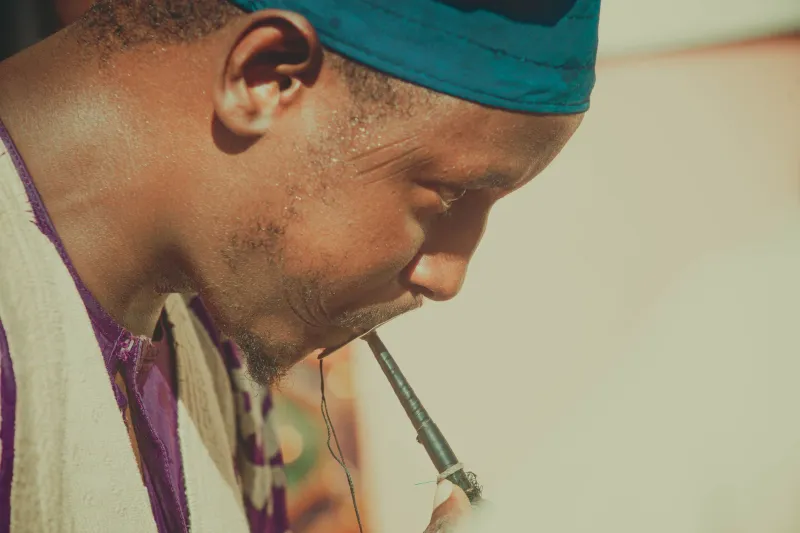
There's a moment — and if you've heard it, you know exactly what we're talking about — when a skilled uilleann piper draws a long, aching note from those bellows, and something inside your chest just... cracks open. It's not dramatic. It doesn't announce itself. It simply arrives, like a memory you didn't know you were carrying.
And yet, for most Americans, that moment has never happened. Not because the pipes aren't extraordinary, but because somewhere along the line, this instrument — arguably the most technically sophisticated and emotionally complex in the entire Irish tradition — got left out of the conversation.
That's starting to change. Slowly, stubbornly, beautifully.
Folk Revival's Blind Spot
Cast your mind back to the great American folk revival of the 1950s and '60s. Pete Seeger. Joan Baez. Bob Dylan in his corduroy phase. The movement was hungry for roots music, for authenticity, for instruments that felt ancient and honest. Celtic sounds were absolutely part of that moment — the fiddle, the tin whistle, even the Irish tenor voice found their way into American living rooms and coffeehouses.
But the uilleann pipes? Barely a whisper.
Part of the reason is purely logistical. The instrument is genuinely, almost comically difficult to learn. Unlike the Scottish Great Highland bagpipes — which you blow into with your lungs — the uilleann pipes are powered by a bellows tucked under the player's arm. The bag sits under the other arm. The chanter rests on the knee. There are regulators. There are drones. There are ornaments and cuts and crans that take years to even approximate correctly. Most serious players will tell you it takes a decade before you sound like you know what you're doing, and another decade before you sound like you mean it.
For a folk revival that needed accessible, campfire-ready instruments, the uilleann pipes were a hard sell.
The Gatekeeping Problem
But logistics only explain so much. The deeper issue, if you ask the musicians who've spent their lives in this tradition, is cultural gatekeeping — and it ran in multiple directions.
Within traditional Irish music communities, the pipes carried a weight of reverence that could feel suffocating to outsiders. This wasn't an instrument you picked up casually. You learned from a master. You earned your place at the session. You didn't just show up with a YouTube tutorial and a used set you found on eBay.
That culture of careful transmission, while genuinely important for preserving the tradition, also created invisible walls. American musicians who might have fallen in love with the instrument often didn't know where to start, who to ask, or whether they'd even be welcomed.
At the same time, mainstream American media rarely gave the instrument a platform. When Irish music showed up in movies or TV, it was fiddles and flutes, bodhráns and tin whistles. The pipes appeared occasionally — in period dramas, in sweeping cinematic moments — but almost never in the context of a living, breathing musical culture that Americans could actually connect with.
The Players Who Refused to Stay Hidden
Through all of this, there were always pipers who pushed back against the silence.
Legends like Liam O'Flynn and Paddy Keenan carried the instrument to international stages in the 1970s with Planxty and The Bothy Band respectively, exposing a generation of world music fans to sounds they'd never encountered. Davy Spillane brought the pipes into jazz and rock crossover territory. Seamus Egan, who settled in the US and became a cornerstone of the Philadelphia Irish music scene, helped normalize the idea that the pipes could live comfortably in an American context without losing their soul.
More recently, musicians like Cillian Vallely of Lúnasa and a wave of younger immigrant players arriving in cities like Boston, Chicago, and New York have been quietly, persistently building audiences. Social media has helped enormously. A single well-filmed session clip of a piper playing a slow air can rack up hundreds of thousands of views, reaching Americans who've never set foot in an Irish pub but find themselves suddenly, inexplicably moved.
Why Now?
Something has shifted in the last five or six years, and it's worth paying attention to.
Americans are increasingly hungry for music that feels emotionally honest — that doesn't iron out the rough edges or sand down the grief. The uilleann pipes, with their capacity for extraordinary nuance, their ability to whisper and wail in the same breath, speak directly to that hunger. In a cultural moment defined by anxiety and a kind of collective longing for something real, these pipes hit different.
The slow air tradition in particular — those unaccompanied, freely rhythmic melodies that pipers often play as a kind of musical soliloquy — has found a surprisingly receptive audience among younger Americans who came of age on ambient music, singer-songwriters, and the kind of quiet intensity that Phoebe Bridgers or Sufjan Stevens trades in. The emotional register is surprisingly compatible.
There's also a growing Irish-American identity movement, particularly among younger generations who are actively reconnecting with heritage their grandparents may have quietly set aside during decades of assimilation. For many of these folks, the uilleann pipes represent something specific and irreplaceable — a sound that is definitively, unapologetically Irish in a way that no other instrument quite captures.
Where to Find Them
If you're in the US and you want to hear the pipes played well, you have more options than you might think. Na Píobairí Uilleann — the organization dedicated to preserving and promoting the instrument — has chapters and affiliated teachers across North America. The Catskills Irish Arts Week regularly features piping workshops and concerts that draw serious players from both sides of the Atlantic. The Milwaukee Irish Fest and the Philadelphia Ceili Group's events have both featured pipers in prominent slots in recent years.
And honestly? If you live near any city with a significant Irish immigrant population, there's a decent chance someone is playing pipes at a session near you. You just have to know to look.
An Instrument That Asks Something of You
Here's the thing about the uilleann pipes that nobody really tells you upfront: they demand your attention. Not in an aggressive way. In a quiet, insistent way. You can have a fiddle tune playing in the background while you make dinner. The pipes don't work like that. They ask you to stop, to sit down, to actually listen.
Maybe that's why they've taken so long to find their American audience. We're not always great at stopping.
But the musicians carrying this tradition into the present aren't giving up, and the audiences showing up to hear them — often visibly unprepared for how deeply the music lands — suggest that the moment for the uilleann pipes in America isn't coming.
It's already here. You just have to be quiet enough to hear it.