Breaking the Tipper: How American Bodhrán Teachers Are Reinventing the Way Traditional Percussion Gets Passed On
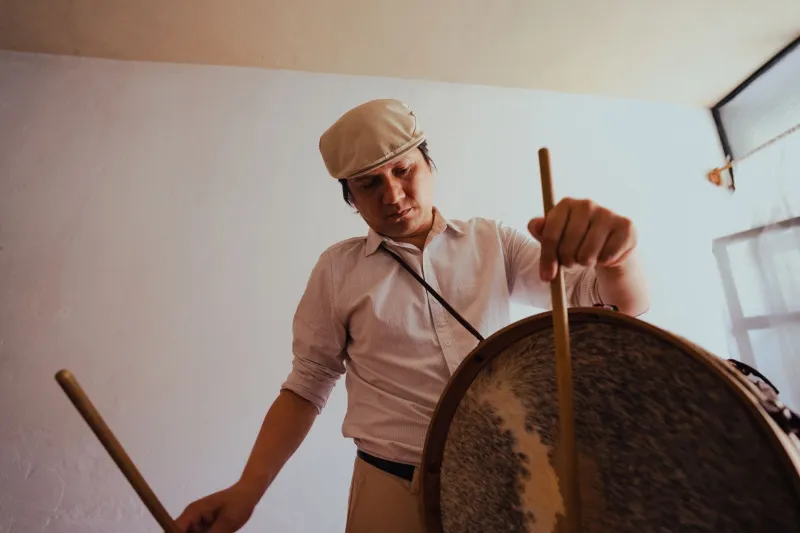
There's a joke that floats around Irish trad circles — the bodhrán is the easiest instrument to pick up and the hardest one to actually play. For American students walking into their first lesson, that punchline lands a little differently. They've usually watched a dozen YouTube videos, bought a drum off the internet, and already developed a grip that would make a Sligo session player wince.
That's exactly the problem bodhrán instructors across the United States are wrestling with right now. And the solutions they're coming up with? They're not exactly what the tradition had in mind — but they might be exactly what it needs.
The Tension Nobody Talks About Out Loud
Teaching traditional music in America has always carried a certain weight. There's an unspoken obligation to the source material, to the culture it comes from, and to the communities — both Irish and Irish American — that have kept it alive for generations. Bodhrán teachers feel that pressure acutely, maybe more than most.
"The bodhrán is already the instrument people argue about," says Maura Clancy, a Chicago-based instructor who has been teaching Irish percussion for over a decade. "Some purists will tell you it barely belongs in a session at all. So when you're teaching Americans who come in with all kinds of physical backgrounds and musical baggage, you're constantly navigating what's sacred and what's just habit."
That distinction — between what's genuinely essential to the music and what's simply the way things have always been done — is at the heart of a quiet pedagogical shift happening in Irish music schools, community centers, and living rooms from Boston to Portland.
The Grip Problem (And Why It's More Complicated Than It Sounds)
Ask any experienced bodhrán player and they'll tell you that technique starts with the hand — specifically, how you hold the tipper. The traditional Kerry grip, the top-end style, the cross-grip: these aren't just aesthetic choices. They shape tone, speed, and your ability to play the subtle internal rhythms that make the bodhrán more than a glorified tambourine.
But here's what traditional instruction often doesn't account for: American students come in all shapes. Large hands, small hands, people with previous repetitive strain injuries from years of typing, drummers who've spent decades locked into a rock backbeat. A grip that feels natural to someone who grew up handling farm tools in County Clare can feel genuinely painful to a software engineer from Austin.
"I spent years trying to get every student into the same hand position before I finally admitted that wasn't working," says Denver-based teacher and performer Sean Ó Murchú, who trained in Ireland before relocating to Colorado. "Now I start by figuring out what someone's hands can actually do comfortably, and then we build toward the sound we're after. The goal is always the sound — not the shape."
This kind of adaptive thinking is increasingly common among American instructors, even if it doesn't always get talked about openly. There's still a reluctance, in some quarters, to admit that the tradition might benefit from any kind of modification. But the teachers who are doing the real work of building new audiences tend to be more pragmatic.
Online Learning Changed Everything — And Not Always for the Better
The pandemic didn't create the online bodhrán lesson market, but it supercharged it. Suddenly, students in rural Tennessee or suburban Phoenix had access to instructors they never could have reached before. Zoom sessions, pre-recorded courses, and dedicated Facebook groups created a new kind of distributed learning community that has genuinely expanded the instrument's reach in the US.
But it also created headaches. Students were showing up to in-person sessions — or their first live lesson — having absorbed all kinds of conflicting information from instructors with wildly different philosophies. Some had been taught styles that didn't translate well to ensemble playing. Others had developed technical habits that were genuinely hard to unlearn.
"The online world democratized access, which is great," says Katie Brennan, who teaches out of a community arts space in Philadelphia and also runs a popular online curriculum. "But it also meant that students were essentially self-assembling their education from ten different sources. I spend a lot of time now at the beginning of lessons just doing a kind of triage — figuring out what's useful and what needs to be gently set aside."
Brennan's hybrid approach — combining structured online modules with regular live check-ins — has become something of a model for how American instructors are handling this new reality. The online components handle the basics: rhythm patterns, tipper movement, basic ornamentation. The in-person or live video sessions are where the real cultural transmission happens.
Authenticity Isn't a Fixed Point
Maybe the most interesting shift in American bodhrán pedagogy is a philosophical one. Increasingly, instructors are pushing back against a kind of static idea of authenticity — the notion that there's one correct way to play, rooted in a specific time and place, and that any deviation from it is a betrayal.
"Irish music has always evolved. It moved to America and changed. It absorbed new influences and gave some back," says Ó Murchú. "The bodhrán itself is a relatively recent addition to the tradition. Treating it like some ancient sacred artifact is a bit of a stretch."
That doesn't mean anything goes. Teachers are still deeply committed to grounding students in the actual feel and function of the instrument within a session context — the way it supports rather than dominates, the way it listens as much as it plays. But they're holding that commitment alongside a genuine openness to the needs and bodies and musical histories of the people sitting across from them.
Clancy puts it simply: "My job isn't to produce Irish people. My job is to help American people connect to this music in a way that's real and respectful and sustainable. Those are different things."
Why This Matters Beyond the Drum
The bodhrán teaching conversation is really a proxy for something much bigger happening in Irish music in America right now. As the tradition finds new audiences — younger players, players from non-Irish backgrounds, players who came to trad through a Spotify algorithm rather than a grandparent — the people doing the teaching are being asked to hold two things at once: the weight of where this music comes from, and the reality of where it's going.
That's not a comfortable position. But it might be exactly the right one.
The sessions are still happening. The music is still alive. And somewhere in a community center in Chicago, a software engineer with a slightly unconventional grip is finally getting the hang of a Kerry reel — one adaptation at a time.