Behind the Glass: How Irish American Producers Are Giving Traditional Music a New Voice
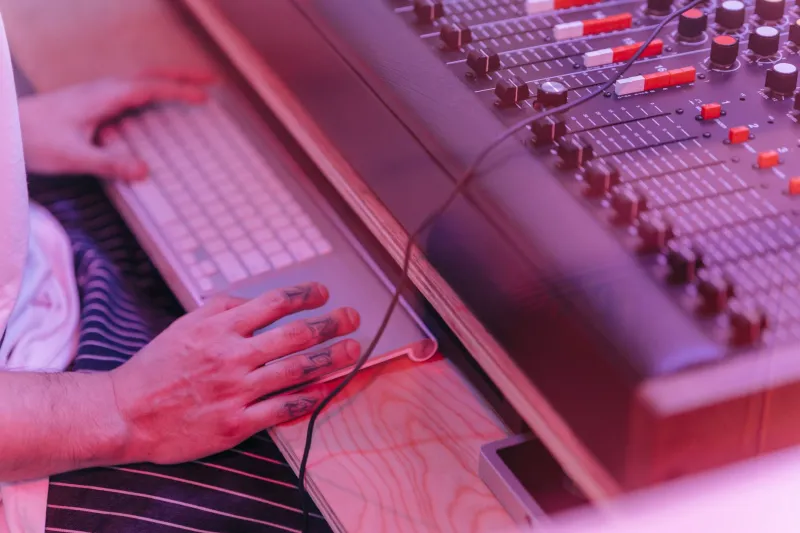
There's a running joke in traditional Irish music circles that the best recording setup is a pub corner, one decent microphone, and a pint of Guinness within arm's reach. The session sound — that warm, slightly chaotic, deeply human blur of fiddles and flutes — has always been the gold standard. So what happens when a generation of Irish American music producers, raised on both Coltrane and Christy Moore, walks into a proper studio and tries to bottle that lightning?
Something pretty remarkable, it turns out.
The Sound of Two Worlds
Grow up Irish American in Boston, Chicago, or the Bronx and you're absorbing two musical educations simultaneously. There's the American side — hip-hop production values, country studio polish, the kind of low-end punch that makes a Spotify stream sound like a concert. And then there's the stuff you heard at family kitchens and céilís, where the music breathed differently, where imperfection was practically a virtue.
Producers coming out of that dual upbringing are uniquely positioned to bridge those worlds. Take someone like Maura Kinsella, a Boston-based engineer and producer whose credits now span both indie folk and traditional sessions. She talks about her early frustration trying to record a slow air — the kind of plaintive, unaccompanied melody that gets under your skin and stays there.
"American studio instincts say, fix the room, compress the dynamics, clean it up," she explains. "But a slow air needs that breath. It needs the room. The moment you over-process it, you've killed the thing that made it worth recording."
Kinsella's solution was to unlearn as much as she learned. She started recording sessions in unconventional spaces — church halls, wooden-floored living rooms, even a converted barn in western Massachusetts — to capture the natural reverb that a traditional tune demands. The results landed her work with several emerging Boston-Irish acts, and her approach is now being noticed far beyond New England.
From the Session to the Stream
The distribution question matters just as much as the sonic one. Traditional Irish music has historically suffered on streaming platforms — not because the music isn't compelling, but because it hasn't always been packaged in ways that make algorithmic discovery easy. That's changing fast.
Producers like Declan Fogarty, who grew up in a Galway-Irish household in Queens before studying audio engineering at NYU, have been thinking hard about how traditional music travels in the digital age. Fogarty has worked with both established names on the Irish American festival circuit and newer artists building their audiences from scratch on Bandcamp and Spotify.
"The music is incredible, but sometimes it was being presented in ways that made it feel like a museum piece," he says, carefully. "My job isn't to modernize it — I'd never want to do that — but to make sure the energy of a live session actually survives the journey into someone's earbuds."
His technique involves what he calls "spatial layering" — using modern mixing tools to give each instrument its own breathing room in the stereo field, so that a listener wearing headphones on the subway in Brooklyn feels like they're sitting at the table rather than watching from a distance. It's a subtle distinction, but it's the difference between music that gets skipped and music that makes someone stop mid-scroll.
Old Instruments, New Infrastructure
The producers making the biggest waves aren't just changing how the music sounds — they're changing how it gets made in the first place. Collaboration between Irish-based artists and American producers is now genuinely routine in ways it simply wasn't a decade ago. Remote recording sessions, where a fiddle player in Clare sends stems to a producer in Chicago, have become a normal part of the workflow.
That transatlantic pipeline has opened doors for artists who might never have had the budget for a full studio session in Ireland. A young uilleann piper in Donegal can now work with a producer in Philadelphia who understands both the technical demands of the instrument and the American market they're trying to reach.
Siobhán Daly, who produces out of a home studio in Portland, Oregon, has built much of her career on exactly these kinds of remote collaborations. She's clear-eyed about what makes them work — and what can go wrong.
"You have to trust each other," she says. "The artist has to trust that I'm not going to sand off the rough edges that make their playing theirs. And I have to trust them when they say something doesn't feel right, even if it sounds technically clean. That conversation — that back and forth — is where the good stuff comes from."
What Gets Preserved, What Gets Pushed
Not everyone is entirely comfortable with the direction things are heading. Some traditionalists worry that studio polish, however well-intentioned, risks flattening the regional and personal distinctiveness that makes Irish music so rich. A reel played in Sligo doesn't sound like one played in Clare, and that difference matters.
The producers we spoke to are, broadly, aware of this tension and take it seriously. Most describe their role as one of amplification rather than transformation — making the artist's intention clearer and louder, not substituting their own aesthetic for it.
What's emerging is something genuinely exciting: a production culture that's fluent in both the language of contemporary audio and the deep grammar of traditional Irish music. It's not a compromise. It's a conversation.
And if you close your eyes and listen to the best of this new wave of recordings, you can still hear the pub corner in there. The pint is just out of frame.