Colcannon, Craft Beer, and Community: The Real Story Behind Irish Pub Food in America
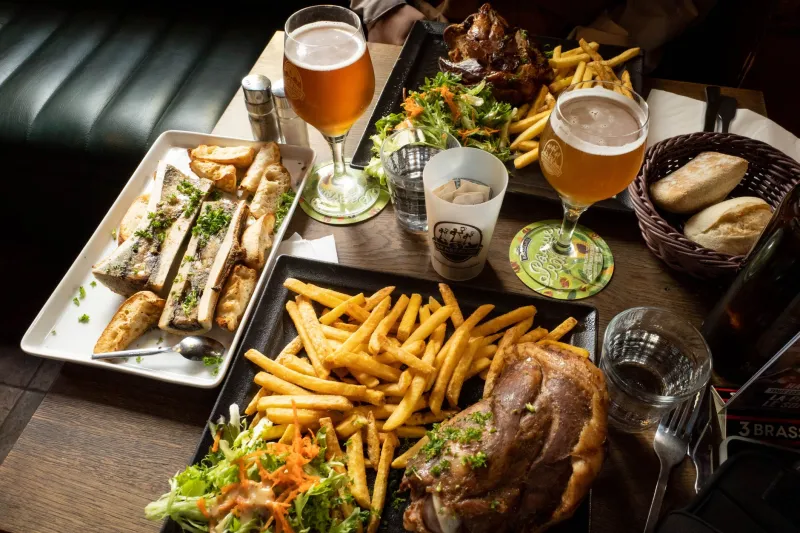
Walk into any Irish pub worth its salt in Boston, Chicago, or San Francisco and you'll find more than just a pint — you'll find a plate of something that tastes like memory. The shepherd's pie sitting under a heat lamp at a Southie bar, the dense slab of soda bread dropped on your table before you've even ordered — these aren't accidents. They're the result of generations of Irish immigrants carrying their kitchens across the Atlantic, one recipe at a time.
The Suitcase Full of Recipes Nobody Talks About
When the Irish came to America — in waves that peaked during the Famine years of the 1840s and continued well into the twentieth century — they brought almost nothing. But what they carried in their heads and hands turned out to be one of the most durable forms of cultural preservation imaginable: food.
Colcannon, a simple mash of potatoes and cabbage or kale, was peasant food back in Ireland. Cheap, filling, and made from whatever was growing in the field. But in America, it became something else entirely — a dish loaded with meaning. Serve it on St. Patrick's Day in a Chicago pub and watch what happens. People don't just eat it; they talk about their grandmother, their county of origin, the version their mother made that was never quite the same as anyone else's.
That emotional weight is exactly what Irish-American pub owners have understood for decades. The food isn't just a menu item. It's a handshake with the past.
How the Pub Kitchen Became a Cultural Archive
Speak to anyone who runs a serious Irish establishment in the States and they'll tell you the same thing: authenticity is a moving target, and that's okay. Maura Gallagher, who co-owns a well-regarded Irish pub in Philadelphia's Fishtown neighborhood, puts it plainly. "My grandmother's Irish stew had no tomatoes in it. Mine has a splash of Guinness and sometimes a bit of thyme I grow on my back step. Is it still Irish stew? Absolutely. It's just Irish stew that grew up in America."
That kind of gentle evolution is the thread running through Irish-American pub food. The core dishes — stew, soda bread, colcannon, champ, boxty — have stayed remarkably intact even as they've absorbed local influences. In New Orleans, you'll find Irish pubs where the stew gets a Cajun kick. In New York's Hell's Kitchen, a neighborhood with deep Irish roots, some spots serve corned beef and cabbage that owes as much to Jewish deli culture as it does to County Cork.
Corned beef itself is a fascinating case study. It's not particularly traditional in Ireland — bacon and cabbage is the more historically accurate combination. But Irish immigrants in New York's Lower East Side found corned beef affordable and available, borrowed the curing technique from their Jewish neighbors, and created what is now the dish most Americans associate with Irish cooking. It's a beautiful, messy piece of culinary history that tells you everything about how cultures actually mix.
The Chefs Keeping It Real
A newer generation of Irish-American chefs is pushing back against the idea that pub food has to mean heavy, uninspired plates. Across cities like Denver, Austin, and Seattle — places with growing Irish-American communities — younger cooks are taking traditional ingredients and treating them with the same respect you'd find in any serious kitchen.
Seamus O'Brien, a chef who trained in both Dublin and New York before opening a gastropub in Portland, Oregon, talks about his approach with obvious passion. "Soda bread, when it's made right, is one of the most honest loaves you'll ever eat. No yeast, no fuss — just flour, buttermilk, baking soda, and salt. But you have to treat the dough gently. People rush it. They work it too hard and it comes out like a hockey puck." His version uses a mix of whole wheat and white flour and is served warm with Irish butter. It sells out every single day.
O'Brien also makes a version of Dublin coddle — a slow-cooked dish of sausages, bacon, and potatoes that's been Dublin working-class comfort food for centuries — that he describes as "probably the most Irish thing on my menu that nobody's heard of." He's on a quiet mission to introduce dishes beyond the usual suspects, and he's finding that American diners are more curious than he expected.
Why the Pub Table Still Matters
There's a reason Irish pubs in America have outlasted almost every other ethnic restaurant trend. It's not just the whiskey or the live music, though those certainly help. It's the table itself — the communal experience of sitting down with strangers and sharing food that comes with a story attached.
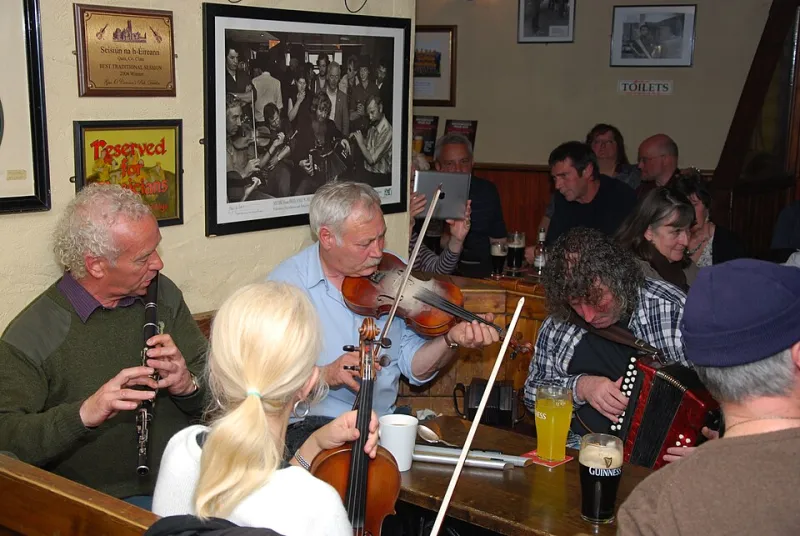
In a country where Irish-Americans number somewhere around 35 million people, according to Census data, there's a massive population with a genuine appetite — literal and figurative — for connection to that heritage. And the pub kitchen has always been where that connection gets made tangible. You can read about the Famine, you can watch documentaries about emigration, but eating a bowl of colcannon in a dimly lit bar while a fiddle player works through a reel in the corner? That hits differently.
The best Irish-American pub kitchens understand they're not running a museum exhibit. They're running a living tradition. The recipes change, the ingredients adapt, the chefs bring their own personalities to the plates. But the spirit — that instinct toward warmth, toward feeding people well, toward making strangers feel like they've come home — that part stays exactly the same.
And honestly? That's about as Irish as it gets.