Conas Atá Tú? How a New Generation of Americans Is Falling Hard for the Irish Language

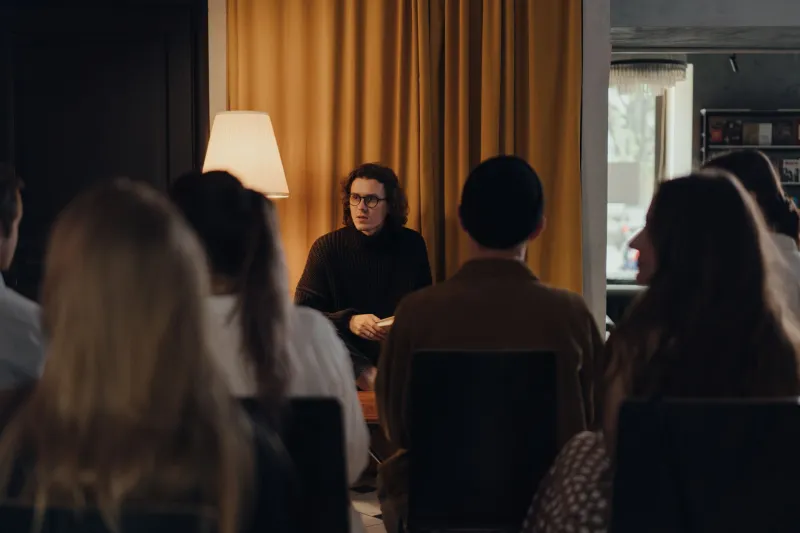
Photo by Photo by Brooke Cagle on Unsplash on Unsplash
Katie Brennan didn't grow up speaking Irish. She grew up in suburban Cleveland, Ohio, with a last name she'd never thought much about and a family that celebrated St. Patrick's Day with green bagels and not a whole lot else. Then, at 27, she got a DNA test result that came back 68% Irish. Then she went down a rabbit hole. Then she found @gaeilge.daily on TikTok. Then things got complicated.
"I started just learning phrases," she says. "Like, go raibh maith agat — thank you. And then I wanted to know why it literally meant 'may you have goodness.' And then I wanted to know everything."
Katie is not alone. Not even close.
The Numbers Behind the Revival
Duolingo reported a significant spike in Irish language learners in the US over the past three years, with Irish consistently ranking among the fastest-growing languages on the platform relative to its global speaker base. Apps like Téigh i nGleic and Clilstore have seen similar upticks in American users. And communities on Reddit, Discord, and TikTok dedicated to Irish language learning have quietly swelled into serious hubs of daily practice.
For a language that has fewer than 100,000 daily native speakers worldwide — mostly in the Gaeltacht regions along Ireland's western seaboard — that kind of international attention is remarkable. It's also not entirely surprising when you look at what's driving it.
Three Roads to the Same Destination
Talk to American Irish-language learners and you'll notice a few recurring origin stories. The DNA test is a big one. Services like 23andMe and AncestryDNA handed millions of Americans a piece of information they didn't know what to do with — a percentage, a map, a genetic confirmation of something vaguely felt but never examined. For a lot of people, language became the most direct route into that identity.
"The DNA result felt like a door opening," says Marcus Ó'Sullivan, a 31-year-old graphic designer in Portland, Oregon, who has been studying Irish for two years. "But a door to what? I didn't know anything about Ireland beyond the clichés. Learning the language felt like actually walking through it."
Then there's TikTok. Creators like Siobhán Ní Fhoghlu and various accounts under the loose umbrella of the Irish language TikTok community — sometimes called TikTok Gaeilge — have built genuinely engaged audiences by making the language feel accessible, funny, and alive. Short videos explaining quirky grammatical features, pronouncing place names, or just having casual conversations in Irish have accumulated millions of views from people who didn't know they were interested until they were.
And then there's what you might call the authenticity impulse — a broader cultural mood among younger Americans who are skeptical of homogenized identity and hungry for something that feels specific and rooted. In that context, a minority language with a complex history, a unique grammatical structure, and a living literary tradition becomes genuinely compelling.
What Makes Irish So Weird (and So Wonderful)
Let's be honest: Irish is not an easy language for English speakers. The verb comes first in a sentence. Initial consonants mutate depending on grammatical context — so bean (woman) becomes mná in the genitive case, which is why Mná on Irish bathroom doors baffles tourists. There are no words for "yes" or "no." You don't have a name — your name is on you (Tá Seán orm — literally, "Seán is on me").
This strangeness, counterintuitively, is part of the appeal.
"English is everywhere. It's inescapable," says Dr. Aoife Ní Mhurchú, who teaches Irish language and literature at a US university and has watched enrollment in her courses double over the past four years. "Irish offers a completely different way of structuring reality. Students find that genuinely exciting. It's not just vocabulary — it's a different cognitive architecture."
The Resources That Are Actually Working
For American learners, the toolkit has never been better. Duolingo's Irish course, while imperfect, provides a free entry point with gamified repetition that keeps beginners engaged. Pimsleur's audio program is particularly popular among commuters. For more serious learners, Buntús Cainte — the classic Irish language learning series — is available online, and the website Teanglann.ie offers a comprehensive dictionary with audio pronunciation from native speakers.
The organization Conradh na Gaeilge has US branches in cities including New York, Boston, and Chicago, offering in-person classes and conversation groups. And the annual Oideas Gael cultural festival in Donegal has become a pilgrimage destination for serious American learners who want immersive study in a Gaeltacht environment.
YouTube channels like Irish with Eoin and the output from TG4 — Ireland's Irish-language television channel, much of which is freely accessible online — give learners hours of real-world audio content. For the very dedicated, the Raidió na Gaeltachta app streams live Irish-language radio from the west of Ireland straight to your phone in Cleveland, Portland, or wherever else you happen to be.
More Than a Hobby
What's striking about the American Irish-language community is how seriously people take it. This isn't the equivalent of picking up a few Spanish phrases before a Cancun trip. Learners are investing years, building communities, and in some cases, beginning to pass fragments of the language on to their own kids.
Katie Brennan, back in Cleveland, is now two and a half years into her study. She's in a weekly online conversation group with learners from Ohio, California, and Massachusetts. She's planning a trip to the Aran Islands next year. And she's started teaching her seven-year-old daughter a few words.
"My daughter asked me what language we were speaking," Katie says. "I told her it was Irish. She said — like, from Ireland? And I said yeah. And she said — are we from Ireland? And I said, kind of, yeah. We kind of are."
Tá. Yes.
Kind of.