Leaving the Band to Find the Tune: American Musicians Who Crossed the Atlantic to Learn Irish Music the Hard Way

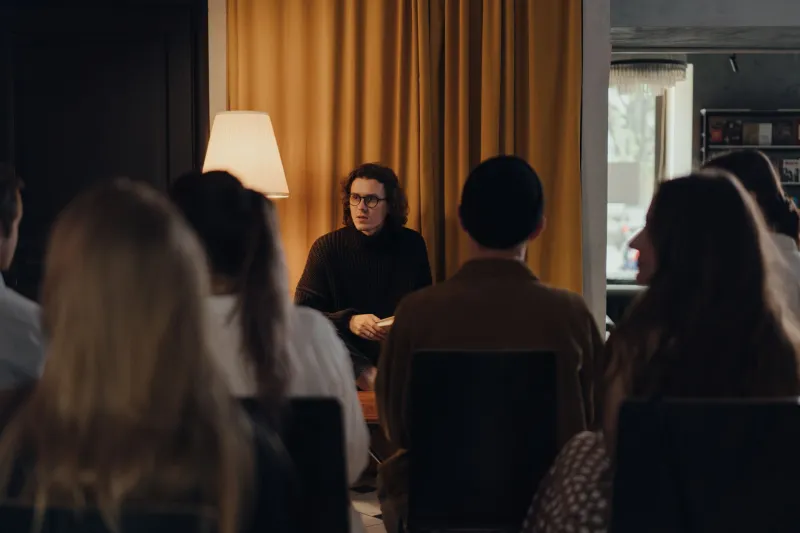
Photo by Photo by Loris Boulinguez on Unsplash on Unsplash
Jason Brierly spent twelve years playing lead guitar in a moderately successful indie rock band out of Nashville. He toured forty states, released four albums, and had the kind of career that looked great on paper and felt hollow in the body. Then, at 34, he sold his gear, sublet his apartment, and moved to County Clare to learn the uilleann pipes.
"People thought I'd lost my mind," he says, laughing over a phone call from Ennis. "My bandmates, my parents, my booking agent. But I'd been chasing something in music for years without knowing what it was, and then I heard a piper at a session in Asheville and something just... clicked open."
Jason is not alone. Across the US, a subculture of serious musicians is making a hard left turn away from their established careers and into the deep, demanding, gloriously unforgiving world of Irish traditional music — trad, as insiders call it. Some are taking extended trips to study at summer schools in Miltown Malbay or Feakle. Others, like Jason, are staying for years. A few have stayed for good.
Why Trad? Why Now?
The easy answer is that Irish traditional music is having a cultural moment. The harder, more interesting answer is that it's always been having a moment — it just took the rest of the world a while to look up from its own noise and notice.
For musicians with serious training in other genres, trad offers something that's genuinely rare: a living oral tradition that hasn't been fully codified or commodified. You can't really learn it from a book. Sheet music exists, but trad players will tell you, sometimes with barely concealed disdain, that the notation misses the point entirely. The music lives in the ornamentation — the rolls, the cuts, the crans — and those can only be learned by listening and imitating, face to face, in real time.
"I have a music degree," says Keiko Yamamoto, a classically trained flutist from San Francisco who has been spending three months a year in Sligo for the past four years. "I can read anything you put in front of me. And trad completely broke my brain, in the best way. There's no shortcut. You either sit with the masters and absorb it, or you fake it. And fakers get found out pretty fast."
That accountability is part of the appeal. Session culture — the pub gatherings where trad musicians play together informally — has a natural quality filter. Play something wrong, play it too fast, play it without the right feel, and the room will let you know, not cruelly, but unmistakably. For musicians used to the relative isolation of studio work or the performative distance of a stage, that immediate, communal feedback loop is intoxicating.
The Masters and the Students
Ireland has a formal infrastructure for this kind of transmission that most American music traditions can only envy. Comhaltas Ceoltóirí Éireann, the organization dedicated to preserving and promoting Irish traditional music, runs a network of branches and events across Ireland and, increasingly, in the US. The Willie Clancy Summer School in County Clare is considered the Oxford of trad education — a week-long intensive where masters teach workshops and the sessions run until four in the morning.
But the most important learning still happens informally. A cup of tea in someone's kitchen. A slow session where the tunes get played at half speed so beginners can follow. An older player who decides, for reasons they might not fully articulate, that a particular student is worth investing in.
"My teacher, Máire — I'm not going to use her full name because she'd hate the attention — she told me that the first year was just about getting my ears right," says Daniel Okafor, a jazz bassist from Brooklyn who took up the bodhrán and, eventually, the fiddle after a trip to Galway in 2019. "She didn't want to hear me play. She wanted me to sit in sessions and listen. Just listen. For months. I thought I'd go crazy. Then one day something shifted and I could hear things in the music I'd been completely deaf to before."
Daniel now splits his time between New York and Galway, and his jazz background has started filtering into his trad playing in ways that are raising eyebrows — some admiring, some skeptical. "There's always a tension," he acknowledges. "The tradition is the tradition for a reason. You don't just walk in and start improvising. But the best players I've met — the real masters — they're not rigid. They know exactly where the line is, and sometimes they step over it in ways that are breathtaking."
The Authenticity Question
Let's name the elephant in the room: is it appropriation? Should Americans — many of whom have no Irish heritage whatsoever — be learning and performing a music that emerged from a specific cultural and historical experience?
The trad community's answer, broadly, is nuanced. There's a difference between commodifying a culture and genuinely apprenticing within it. Most Irish musicians who work with serious foreign students are enthusiastic about the exchange — they see it as the tradition doing what traditions are supposed to do: surviving by moving.
"The music doesn't care where you're from," says Keiko Yamamoto. "What it cares about is whether you're listening. Whether you're respectful. Whether you're doing the work."
The work, it should be said, is considerable. Uilleann pipes — the Irish bellows-blown bagpipes that Jason Brierly is learning — are widely considered one of the most technically demanding instruments in the world. Full mastery takes decades. Jason, after three years in Clare, considers himself a beginner.
"That's the other thing about trad," he says. "In rock, you can get competent pretty fast and then coast. Here, there's always another layer. Always something deeper to hear. I don't know if I'll ever feel like I've arrived, and honestly? That's the point."
What They Bring Back
When these musicians return to the US — if they return — they're not just bringing tunes. They're bringing a philosophy of music-making that cuts against almost everything the American music industry values: patience over product, community over performance, depth over novelty.
Some are starting sessions in cities where trad has historically had a thin footprint — Austin, Denver, Seattle. Others are working the influences back into their original genres in ways that are genuinely new. Jason has started writing songs that layer uilleann pipe drones under what sounds, on the surface, like Americana. Daniel's jazz quartet has begun incorporating jigs and reels as compositional frameworks. Keiko is writing a concerto.
None of them think of themselves as ambassadors or innovators. They're just musicians who heard something that changed them and couldn't unhear it.
"I went to Ireland to learn Irish music," Daniel Okafor says simply. "What I actually learned was how to be a better listener. Turns out that's the same thing."